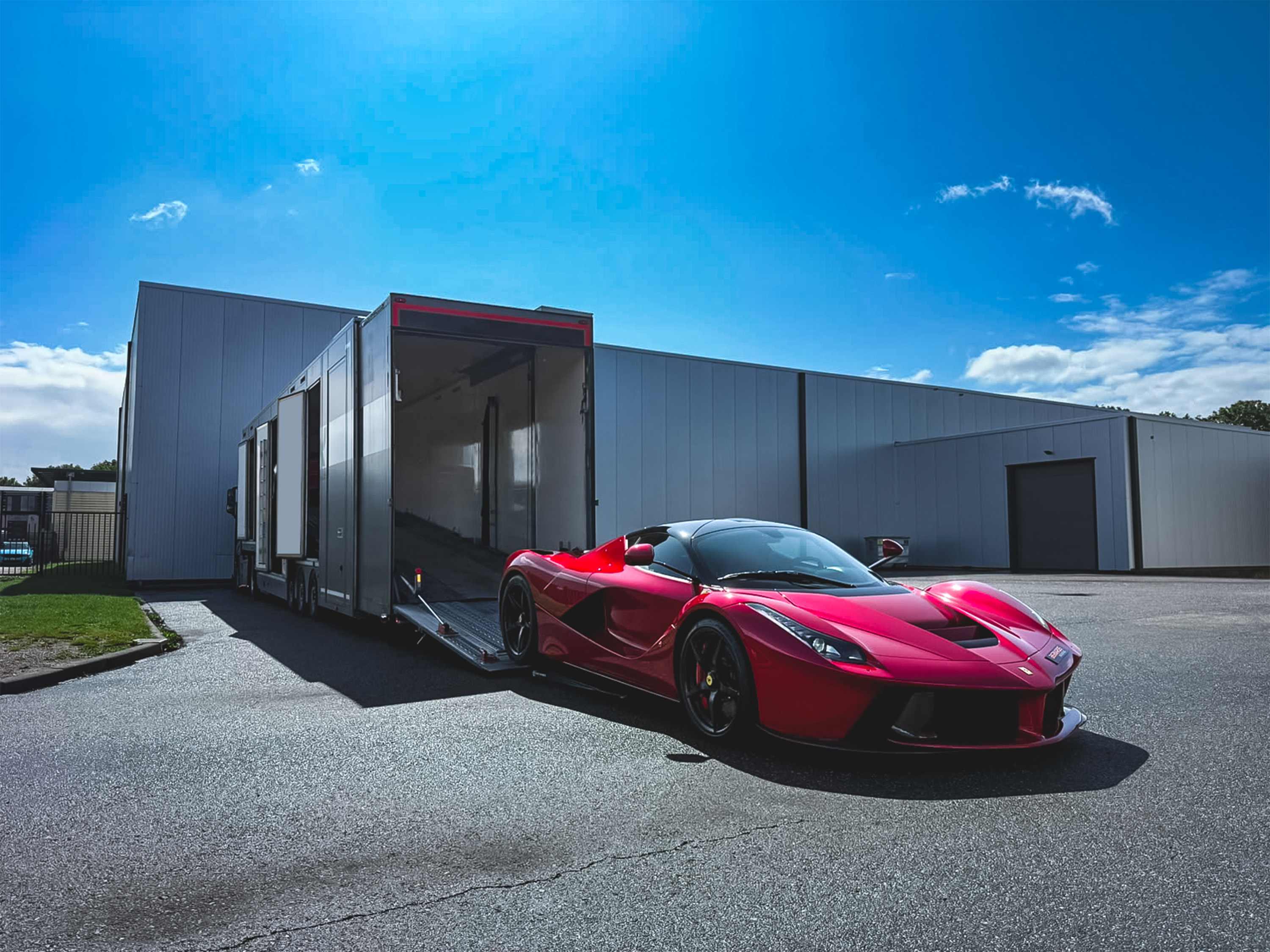
Enclosed car transport across Europe
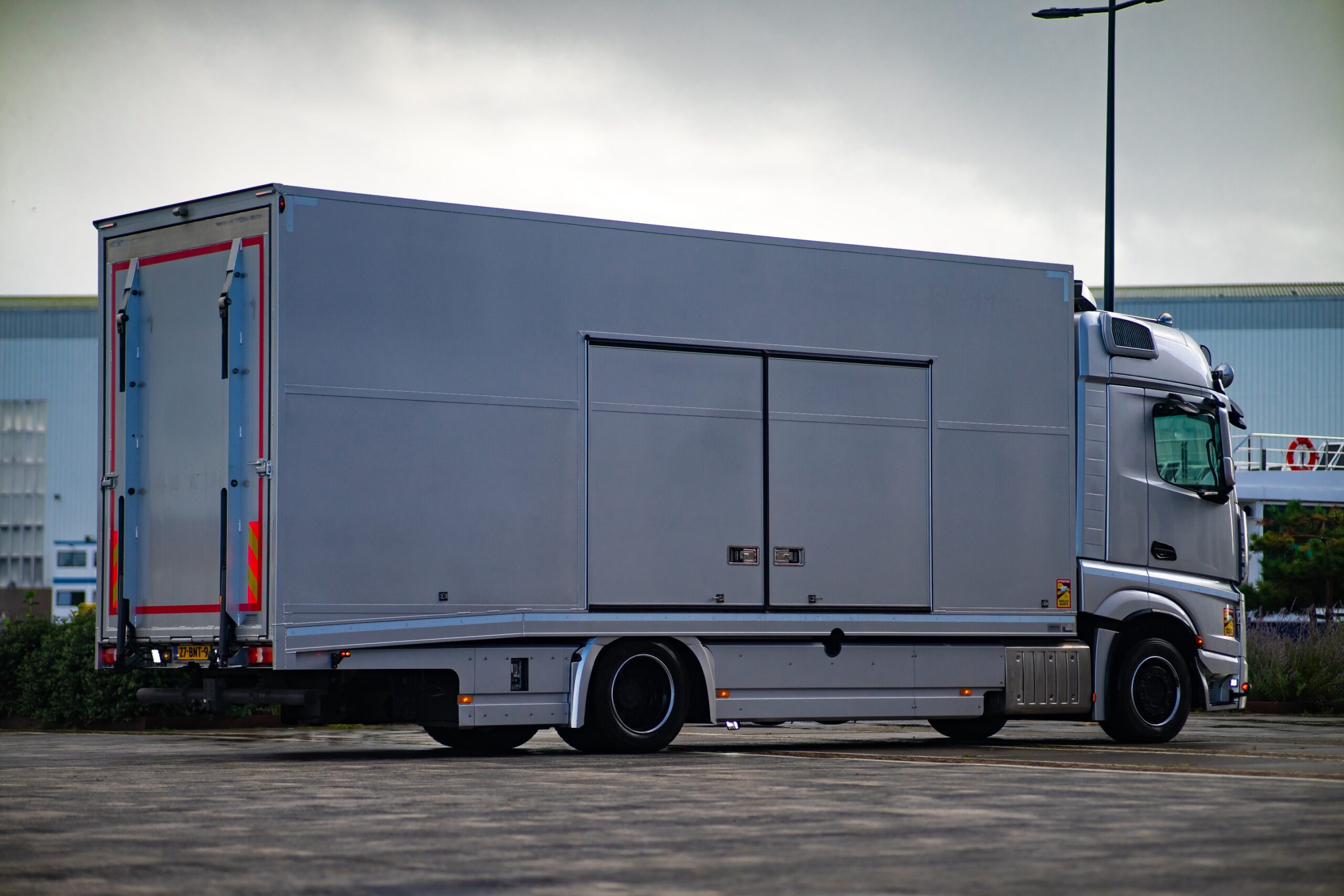
Fully shielded transport for vehicles where condition, mileage and discretion count: from showroom and factory to concours lawn and paddock.
Why enclosed car transport?
In enclosed transport the car travels inside a fully closed trailer: from loading to unloading it is out of sight and shielded from whatever the road throws at it. For everyday cars, open transport is perfectly fine. The moment a vehicle’s condition is part of its value, that changes.
- Value retention. No kilometres added. In the premium and classic segment the odometer reading is part of the market value.
- Protection. Rain, snow, dust, stone chips and UV stay outside, as do the risks of heavy traffic and motorway stops.
- Discretion. Nothing about the trailer reveals what is inside, and handover need not happen in plain view.
- Presentation. The car arrives clean and without traces of transport, ready to show to a client, a jury or the public.
- Control over planning. One door-to-door run with fixed loading and delivery slots instead of transfer points.
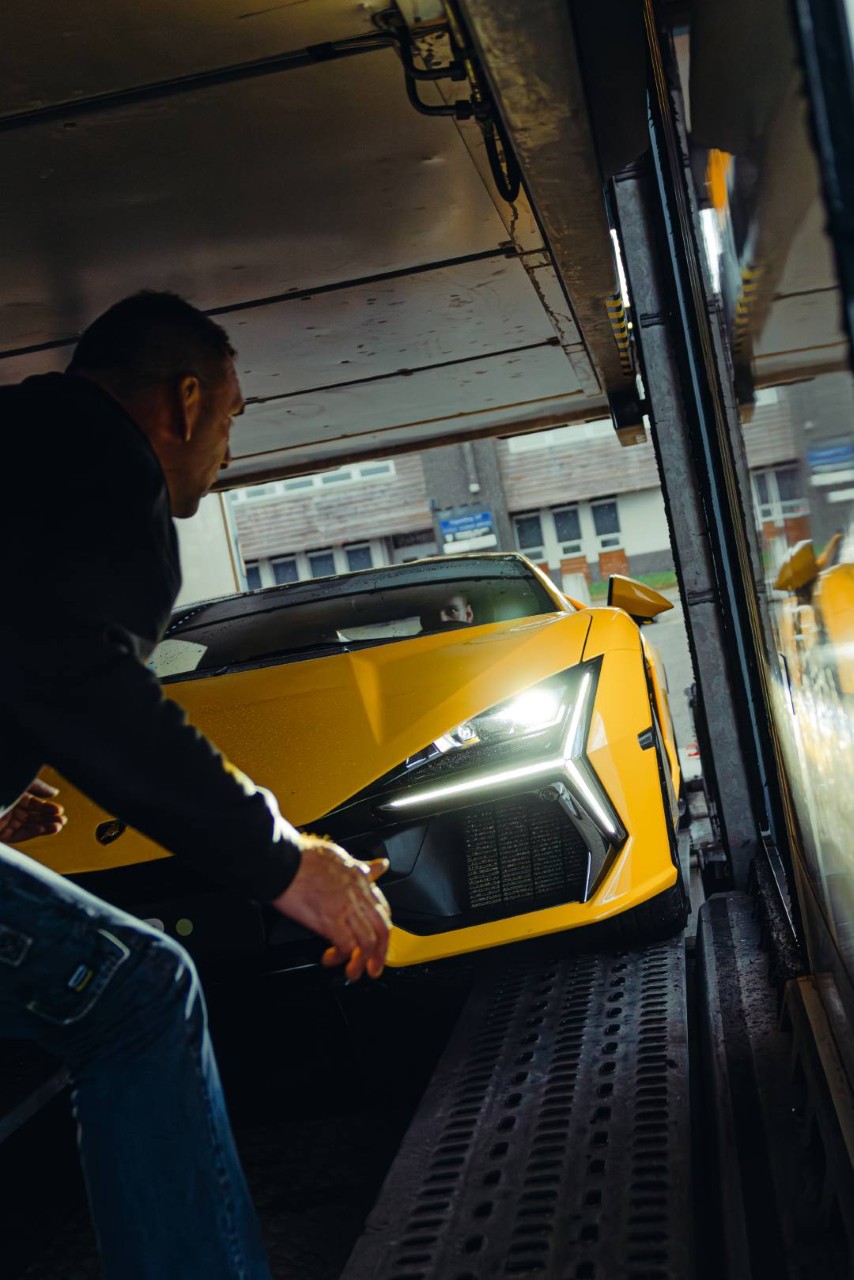
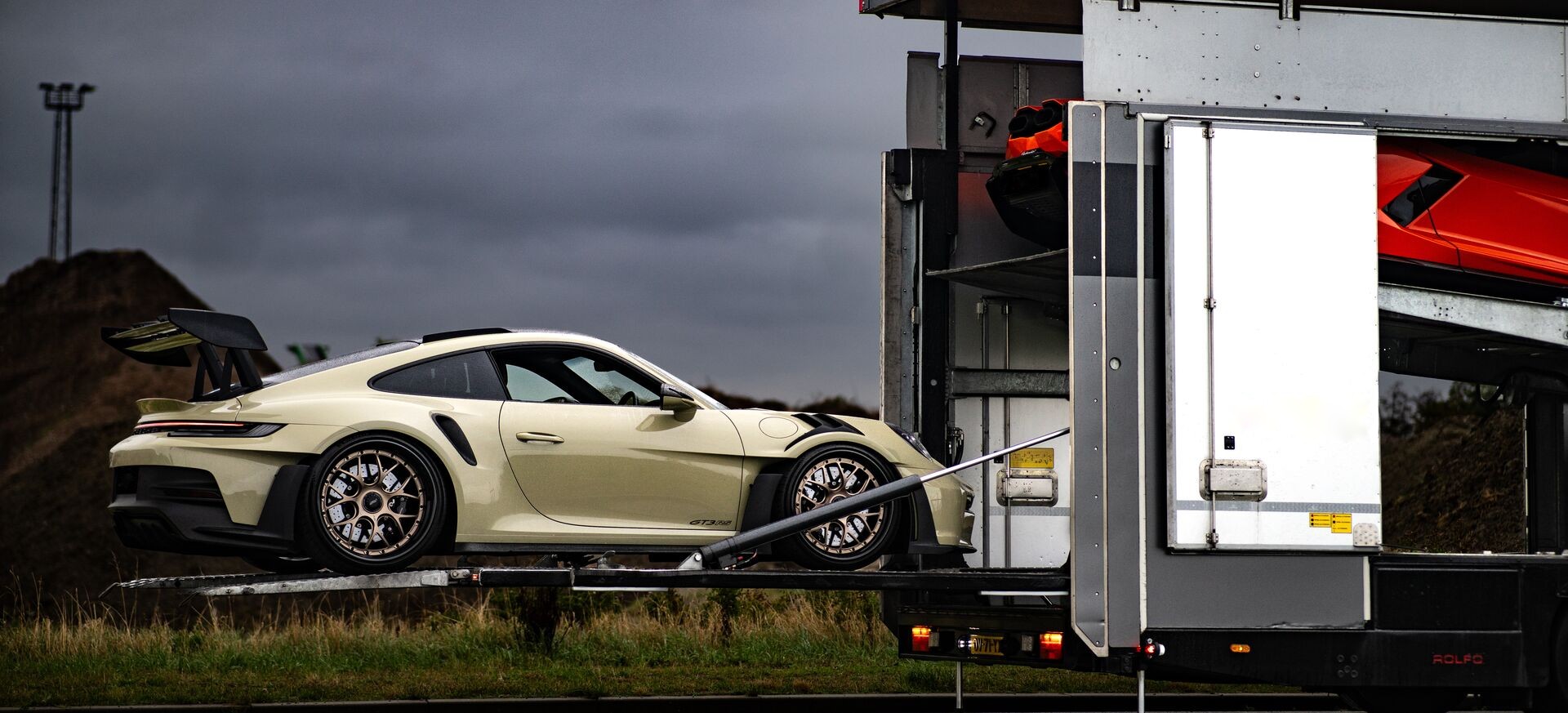
The rest of the difference is in the execution: a low approach angle, a hydraulic tail lift instead of ramps, straps over the wheels, and drivers used to cars with a few centimetres of ground clearance.
What makes car transport exclusive?
Enclosed says something about the trailer. Exclusive says something about everything around it.
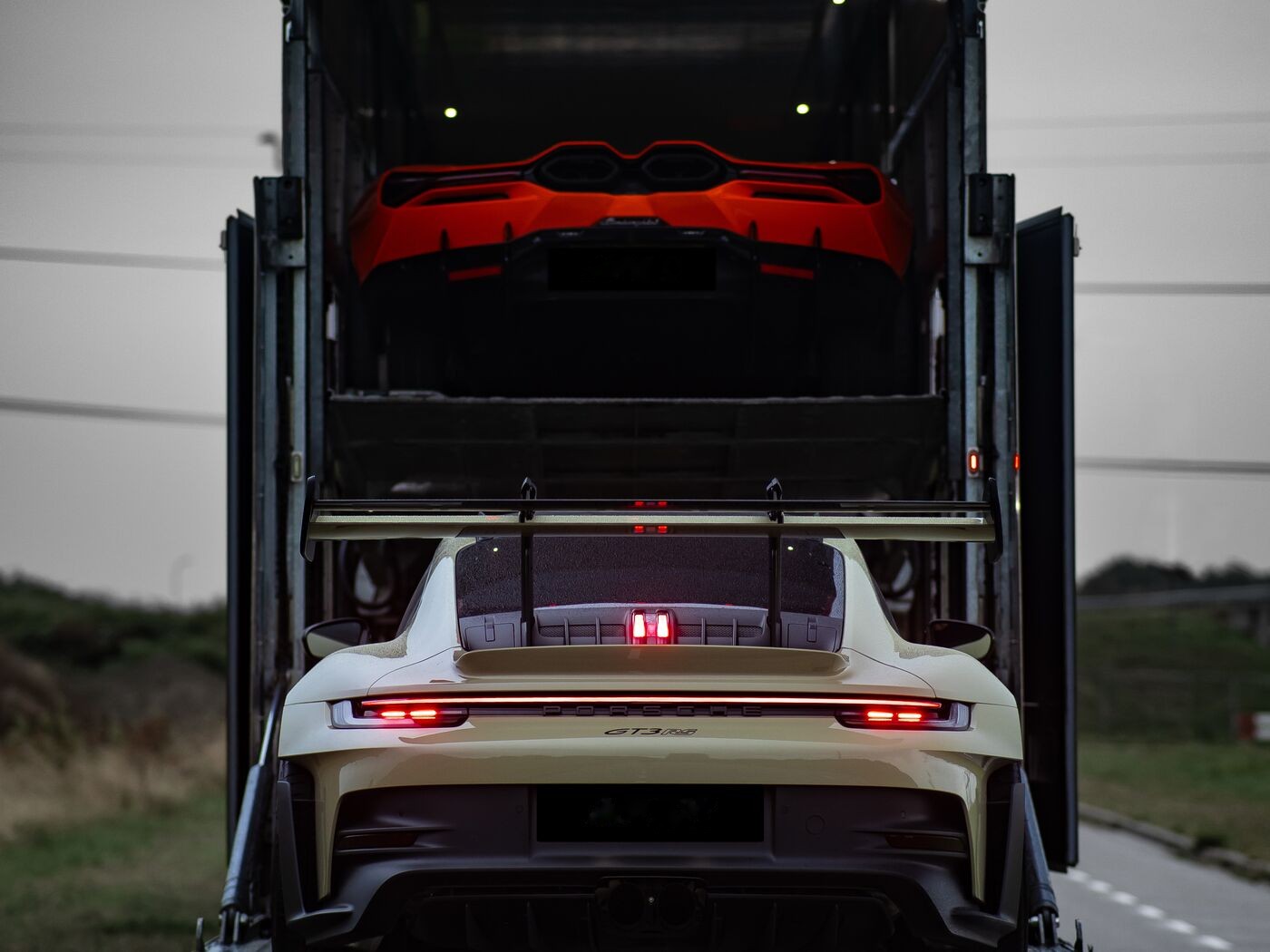
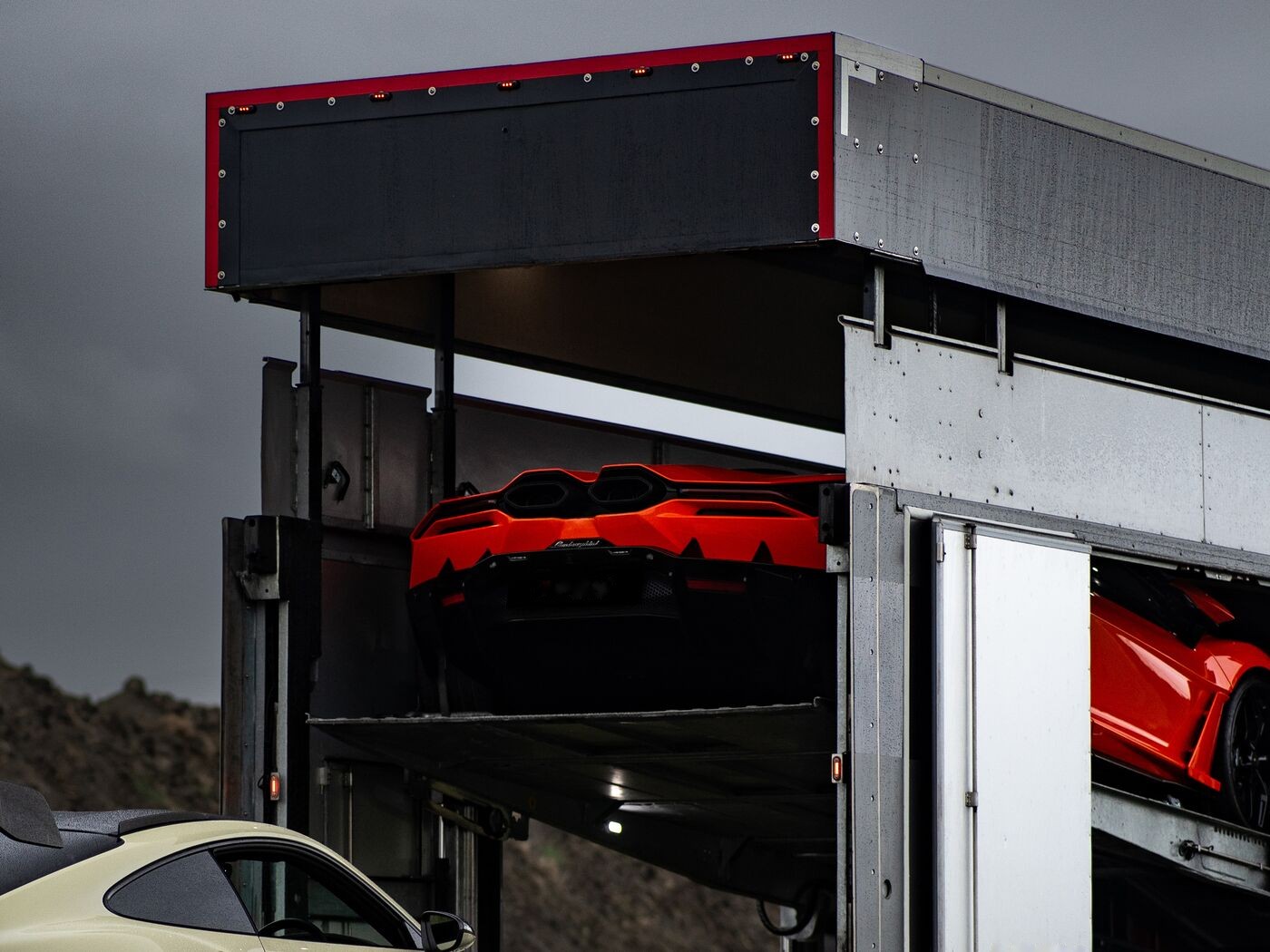
Exclusive car transport is the standard for vehicles where a small mark has large consequences: supercars from Ferrari, Lamborghini, Bugatti, Koenigsegg or McLaren, rare classics and vintage cars, race cars, collector’s pieces, prototypes and press cars. It is not the distance that sets the approach, but the vehicle.
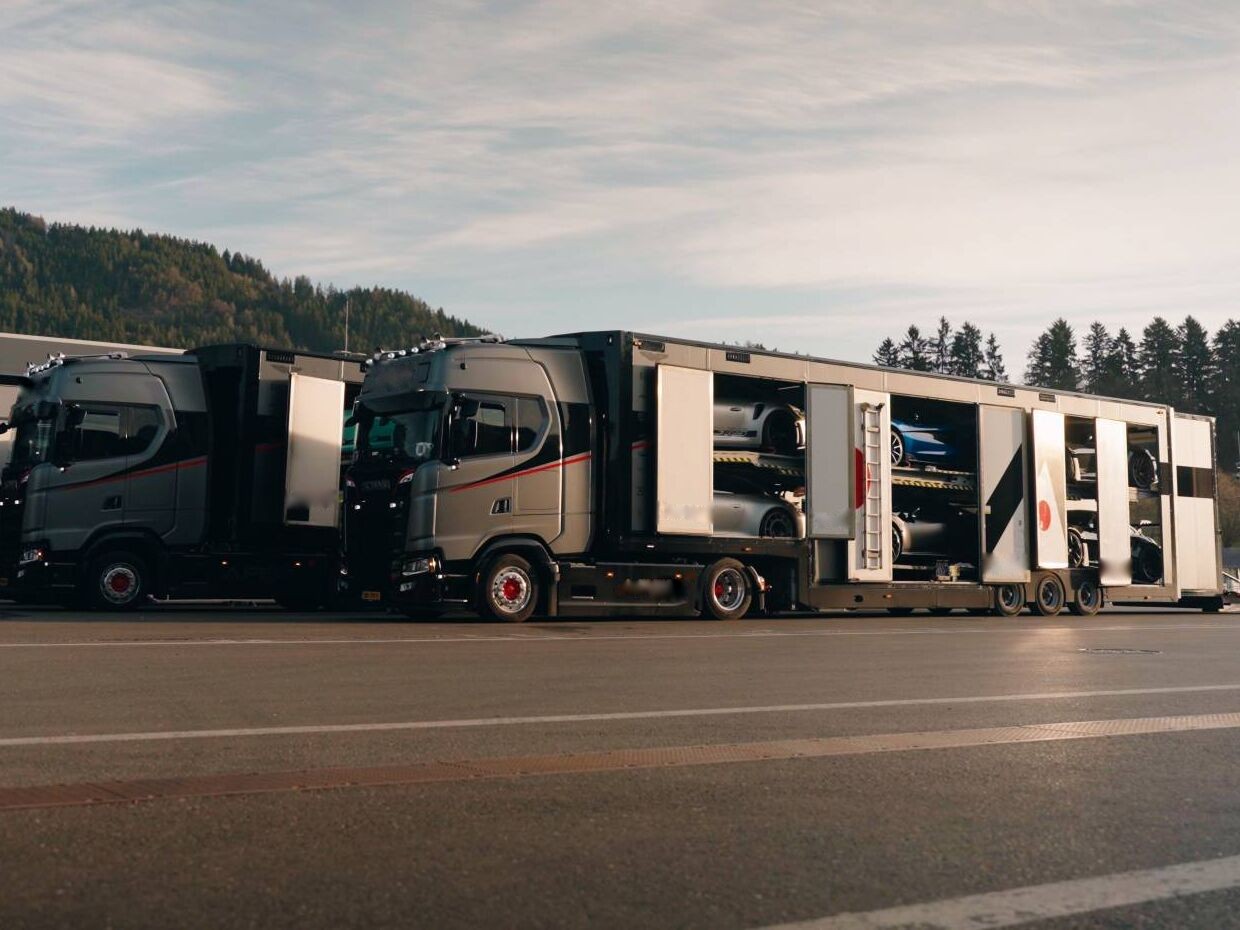
- One run, made to measure. Door to door, one or a few vehicles per trailer, no transfers along the way and loading times planned around your diary.
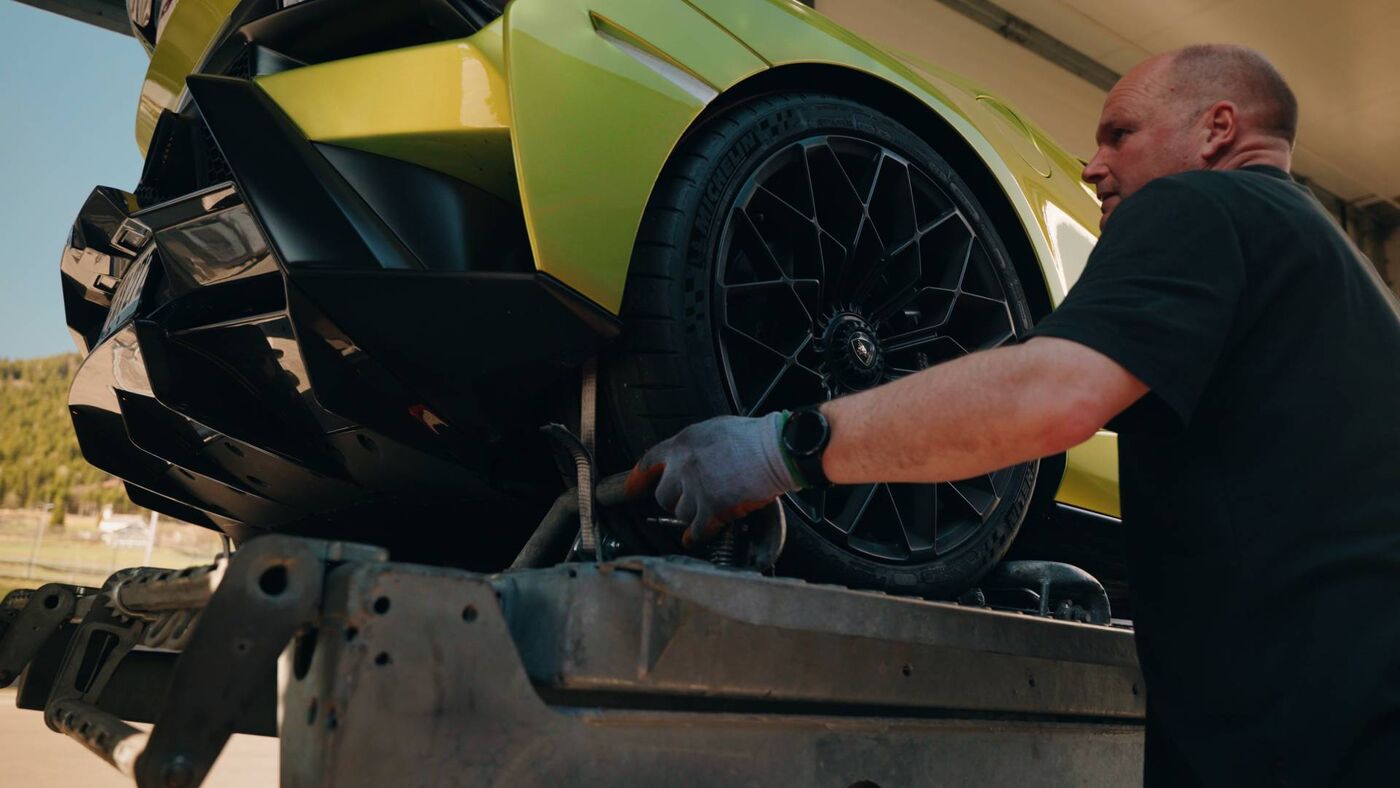
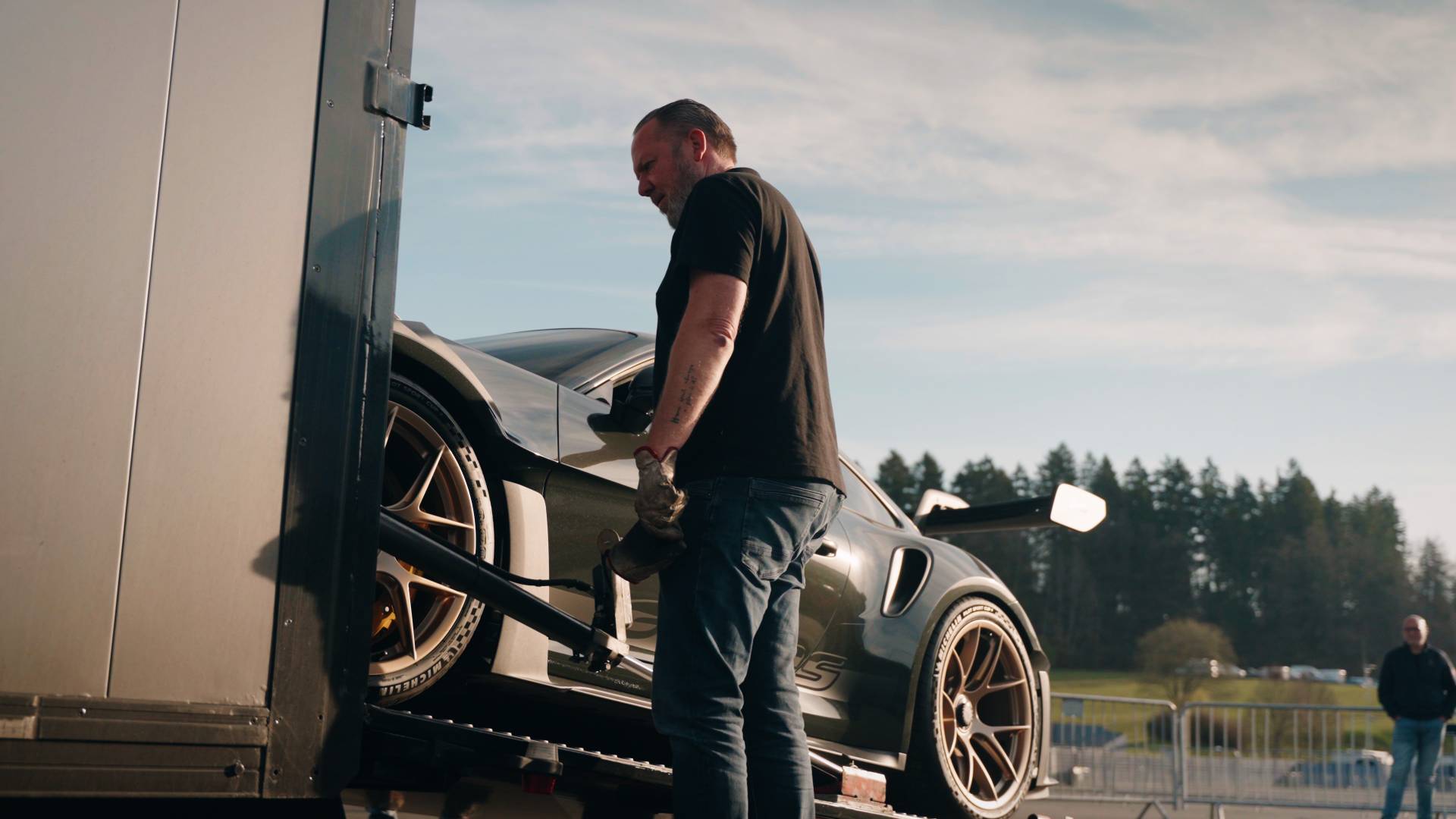
- Securing without compromise. Straps over all four wheels rather than around axles or bodywork, with sill and interior protection fitted before anyone gets in.
- Equipment built for it. Low approach angles, a hydraulic tail lift, air suspension, and trailers with an alarm and GPS tracking.
- Drivers with affinity. People who work with unusual cars every day and know how a vintage clutch behaves or what a carbon splitter will not survive.
- Condition on record. A photographed inspection at departure and on arrival, with an insured value agreed for that specific vehicle beforehand.
- One point of contact. The same person from quote to delivery, reachable while the car is on the road.
For collections, club tours and events, exclusive usually also means several cars at once, a fixed departure time and group logistics that connect to it.
Who is enclosed car transport for?
Seven kinds of client, each with their own reason not to drive a car there.
High-end car dealers
Read moreWhen an exclusive car is sold, the state it arrives in weighs as heavily as the car itself. Moving stock between branches, to clients or across borders leaves the odometer untouched and the paint alone, and a handover need not take place anywhere that does the sale no favours.
Car manufacturers
Read moreConcept cars, prototypes, pre-production models and press cars travel with nothing on the outside to show what is inside. A prototype photographed en route costs development lead; a model that surfaces online too early derails an entire launch. Route and timing therefore follow the internal schedule and the event calendar.
Concours and car shows
Read moreA car heading for Villa d’Este, Goodwood, Rétromobile or Techno Classica arrives in exactly the state in which it will be judged. Rain, dust, stone chips and UV stay outside, the odometer does not move, and the vehicle stays out of sight until the moment of presentation.
Event organisers
Read moreRallies, press launches and brand activations run on timing. Several vehicles have to be in the same place, in the same condition, at the same moment, aligned with build-up and break-down, with international routes, and with whatever is not to be seen yet.
Circuits and race teams
Read moreFor track days and race weekends, transport is not a side issue but part of the preparation. Cars shuttle between workshop, circuit, paddock and collection, often with wheels, tools and spares alongside, and always with an arrival time the rest of the schedule rests on.
Collectors and private owners
Read moreA car that covers a few thousand kilometres a year does not belong on the motorway on its way to a show, its annual service or a second home. Enclosed transport keeps those kilometres off the odometer and the car out of the weather and the traffic, including when a collection moves from one storage facility to another.
Car clubs and touring trips
Read moreClub runs rarely start on the owner’s own doorstep. The cars travel ahead to the starting point in the Alps, Tuscany or the Ardennes so the owners can fly or take the train and drive straight away. Several vehicles in one trailer, with a single arrival time for the whole group.
How an enclosed transport runs
Five steps, from the first planning call to the moment the car is back in place.
Planning up front
Route, timing and loading slot are agreed beforehand, matched to ground clearance, dimensions and the diaries on both sides. Door to door, without transfers.
Inspection and record
At departure the condition of the vehicle is walked through together and documented with photographs, which makes any discussion at delivery unnecessary.
Controlled loading
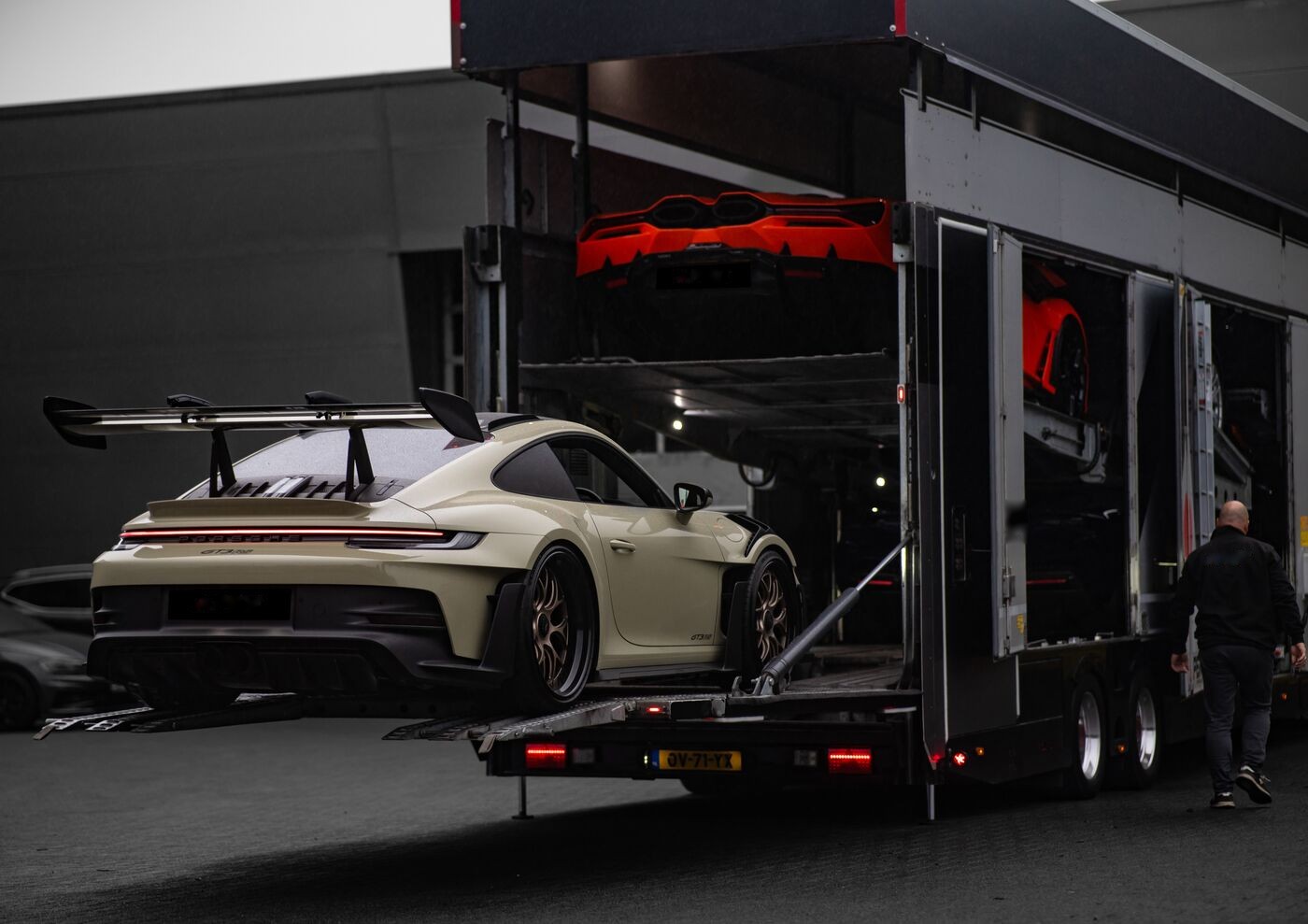
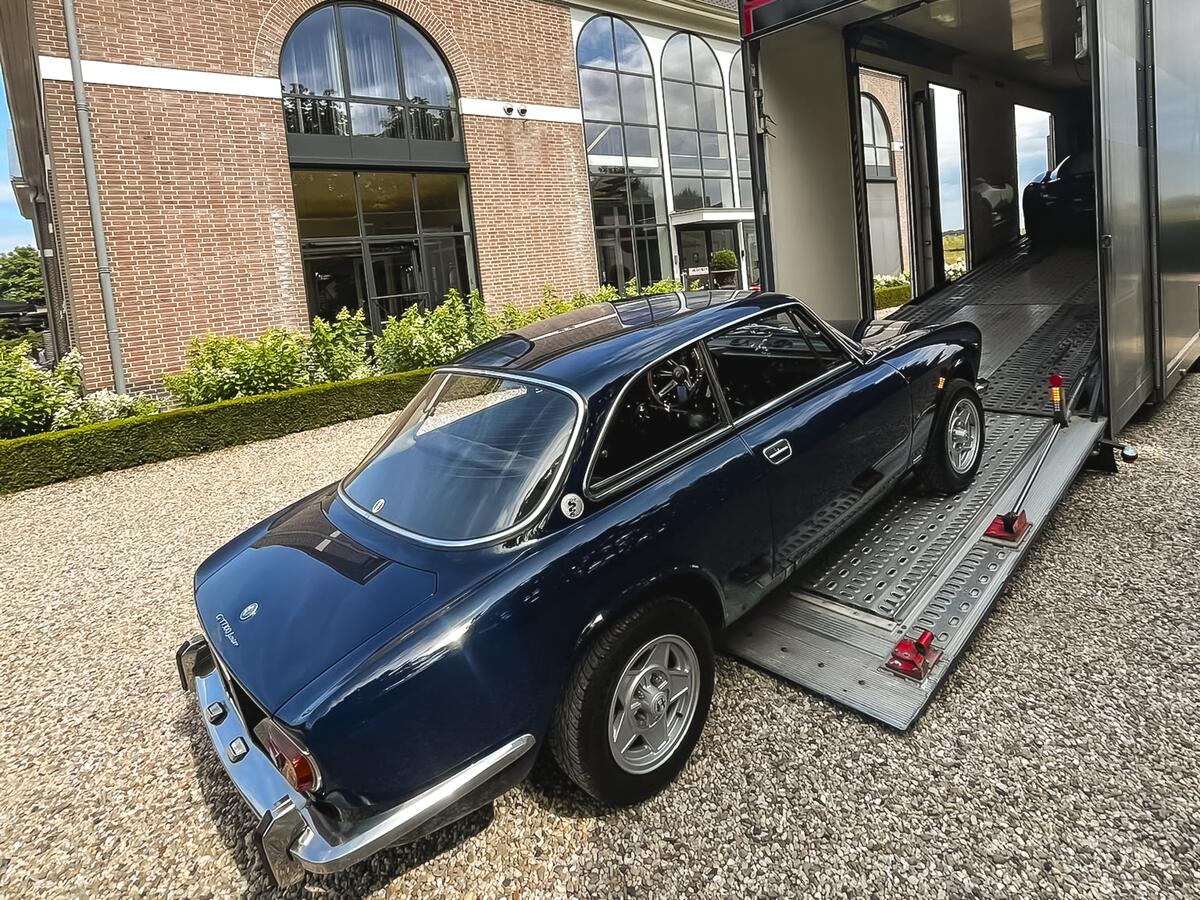
Calmly and without time pressure: interior protection fitted, straps over the wheels, low cars loaded via a hydraulic tail lift rather than ramps.
On the road
The car stands fully shielded inside a closed trailer. One dedicated contact reports departure, progress and the expected time of arrival.
Delivery
Unloading is just as controlled, after which the vehicle is checked over together again: clean, without traces of transport and without extra kilometres.
Routes and specialisms
Enclosed transport within Europe generally runs along fixed routes between the Netherlands and the major car countries. Below are the most requested destinations and client types, with background information on each page.
Most requested routes
- Netherlands – France
- Netherlands – Monaco
- Netherlands – Switzerland
- Netherlands – Italy
- Netherlands – Spain
- Netherlands – Portugal
- Germany – Netherlands
- Germany – Spain
Specialist transport for
- High-end car dealers
- Car manufacturers
- Concours and car shows
- Event organisers
- Circuits and race teams
Request enclosed car transport
Already know when and where a vehicle needs to go? Request a quote straight away, with the car’s details, the collection and delivery address and your preferred dates. For several vehicles or an event, add the build-up and break-down times.
Not sure yet whether enclosed transport is the right choice, or dealing with a vehicle that has its own requirements? Get in touch. Requests and quotes are handled by Apex Car Transport.